
Hi!
I’m Naba. Thank you so much for being here and going on the journey with me.
The short version of my introduction is this: I am a fellow Human, mother, former Refugee, Founder, CEO, Social Entrepreneur, Woman, Iraqi Australian and crazy fan of Rumi poetry. So many labels acquired along the journey of life that inform my life purpose.
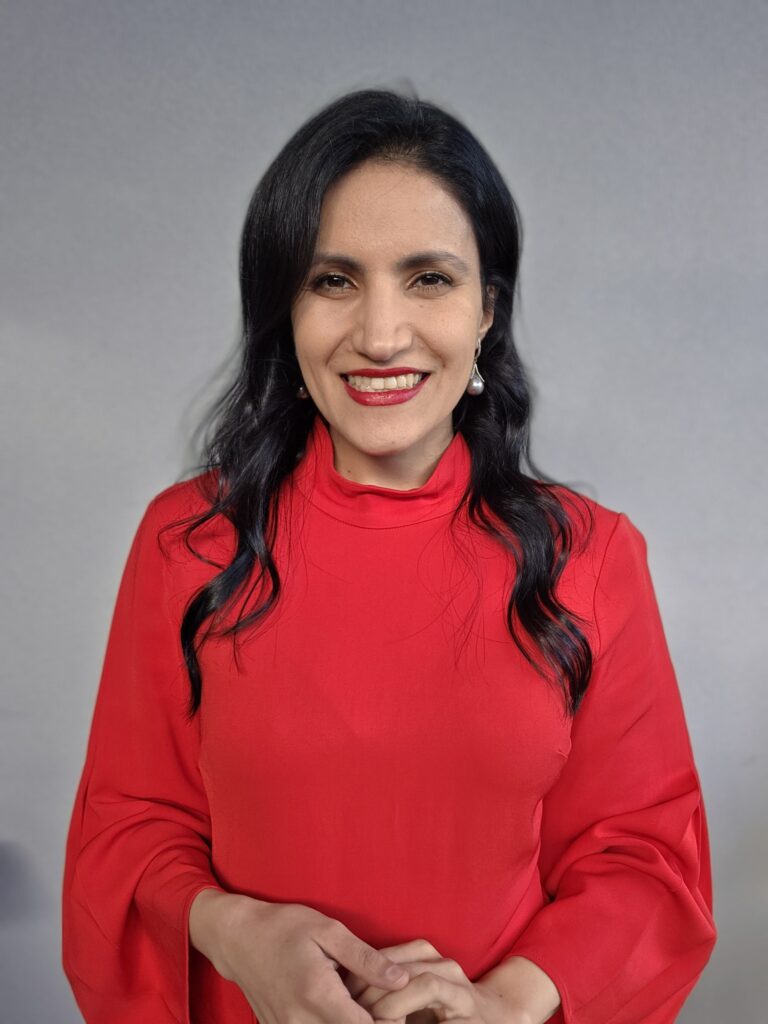
My life’s purpose is to learn about, enjoy and share:
- What this wonderful thing we think of a as “love” might be
- How we can love ourselves – our bodies and minds
- How we can love all around us – our children, romantic partners, families, community, all of humanity, and the Earth
If you want the long version, please read on!
Topics
Childhood in Iraq
I was born in Baghdad and spent my early childhood in a small village in Iraq, shaped by a world marked by political instability, generational trauma, and deeply entrenched social hierarchies. Like many children born into contexts of conflict, poverty and patriarchal norms, I grew up at the intersection of multiple forms of disadvantage — shaped by my gender, my cultural identity, and the socioeconomic realities around me.
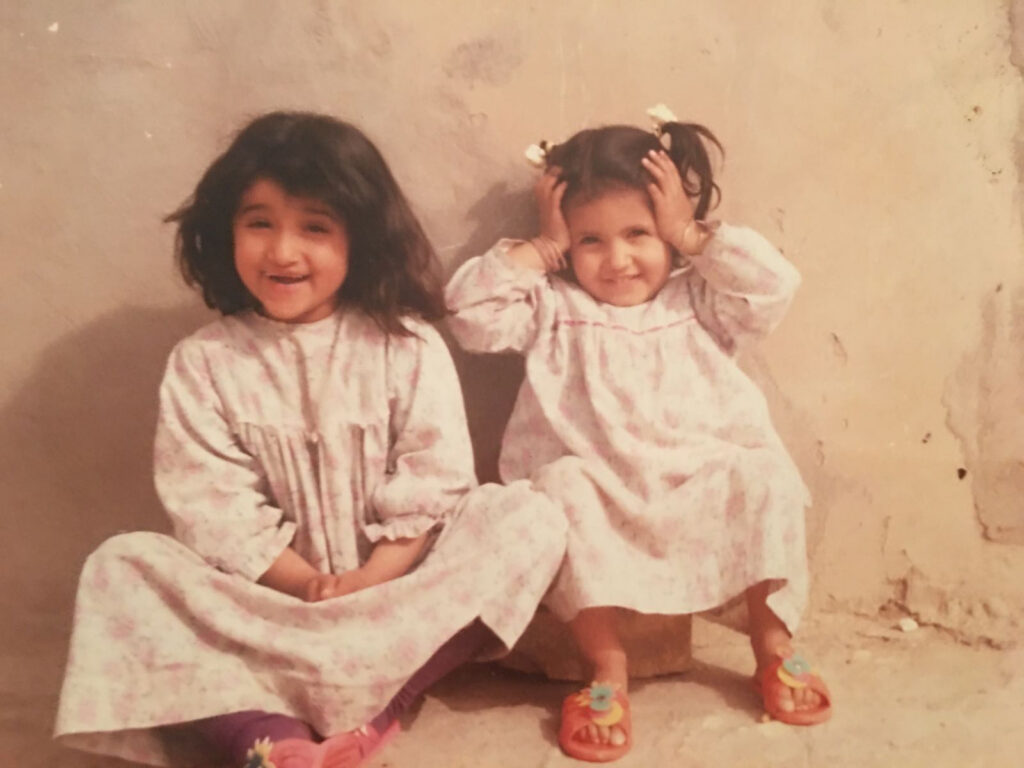
In the environment of my childhood, women and girls had limited autonomy, and restrictive gender expectations shaped every aspect of daily life. Physical, emotional, sexual and religious forms of control were normalised, not because people were inherently cruel, but because generations of war, colonial interference, and social upheaval had distorted what safety, dignity and equality could look like. This was the world that formed my earliest understanding of myself and my place in society.
Iraq — like many countries across the Global South — carried the weight of historical colonisation, geopolitical exploitation, and decades of conflict. These forces shaped not only national institutions, but also the intimate, everyday experiences of identity: how we saw our skin, our language, our culture, and our worth. My childhood was lived within these layers of inherited pain and resilience, and it laid the foundation for the work I would one day dedicate my life to.
My parents were extraordinary in those years. Despite the constraints of their environment, they worked tirelessly to create a safer, more dignified life for us. My mother, pushing against generations of social conditioning, offered us the deepest and most expansive love she knew how to give. My father spent years navigating the dangerous and uncertain refugee routes through Jordan, Yemen, Indonesia and eventually Australia, driven by one unwavering intention: to bring his family to safety. Their courage, sacrifice and powerful love formed the quiet foundation that allowed me to imagine a different future.
Refugee Journey
When I was ten, after the American Invasion of Iraq, everything changed.
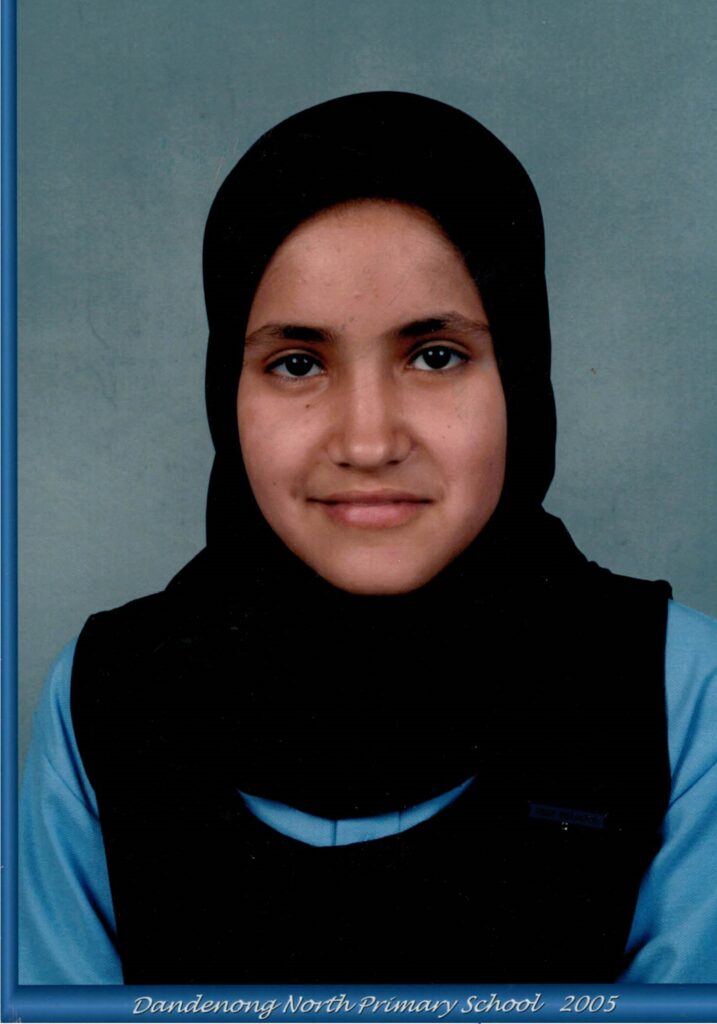
Our parks became Military sites, our museums were looted, and my sister’s school was bombed. My mother hired a taxi to Jordan and we fled the Iraq War. After numerous embassy visits and months of paperwork in Jordan, we were accepted in Australia and I got on an aeroplane for the first time in my life.
I arrived in Melbourne knowing only two English words: “Hello” and “Pepsi.”
Five months later, my father, who had been a surgeon in Iraq and was trying to re-accredit as a surgeon in Australia, died in a car accident on his way to work in the Hospital. I was ten years old.
The refugee journey was not a single moment of escape; it was a long, disorienting transition into grief, poverty, and the painful process of rebuilding a life from nothing.
Growing up in Australia
I love Australia. We are so fortunate to live on land cared for by the world’s longest‑continuing human culture. We are so lucky to learn from First Nations communities. There is profound wisdom in that lineage: wisdom about connection, belonging, community and what it means to be human.
Australia can also be complex, because so many of us carry unhealed pain in our hearts. For me, arriving here did not immediately bring safety or dignity. I continued to feel a sense of being sub-human because of my skin colour, my Muslim identity, our childhood poverty, and my limited English. Racism and Islamophobia were, and continue to be, a weekly experience in my life. And yet, I am deeply proud of all of us — as individuals and as a nation — who continue to choose love, healing and community-building despite these challenges.
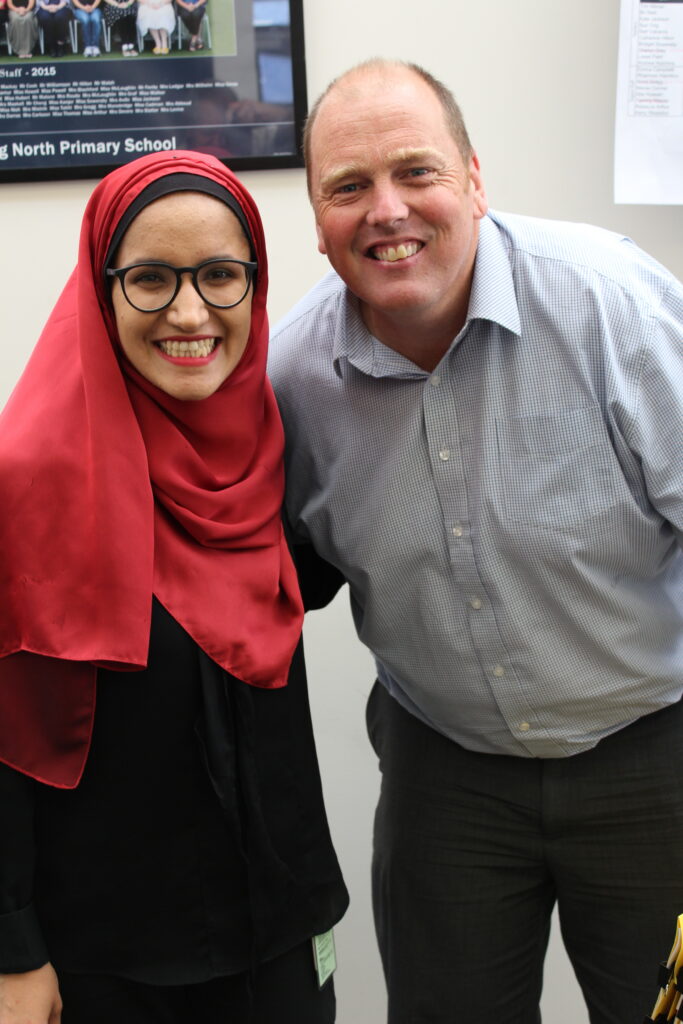
As a child, I internalised the political rhetoric that devalued people like me. I believed I was a burden. I felt guilty for existing. These early experiences shaped my understanding of injustice, but they also shaped my commitment to compassion. They taught me how deeply words can wound — and how deeply love can repair.
Growing up in Australia meant learning to navigate two worlds at once: the world of my heritage, marked by war and displacement, and the world of my new home, marked by opportunity but also by exclusion. It was within this tension that my purpose began to form. I learned to study hard, to work tirelessly, and to dream beyond the limits placed on me. I learned that identity can be both a wound and a source of strength. And I learned that healing — personal and collective — is possible when we choose to see one another with humanity.
Poverty really impacted my experience of growing up in Australia. For three years in high school, I decided not to have friends as my family could not afford to buy birthday gifts for my friends. I heard how much my mother worried about money, and I saw the expression on her face whenever I needed money for school, and I could not bring myself to ask her to buy birthday gifts for my friends. I decided that it was easier not to have friends. I strived for Scholarships at school to ease the financial burden on my mother. My school, Sirius College, was incredibly generous and teachers advocated for me to get Full Scholarships to ease the financial strain.
Social Change
At 15, I realised that adults were as scared and confused as I was. If we wanted a better world, we would have to build it ourselves. I read politics, history, attended protests, and channelled my anger into studying.
Love was always my compass. I loved every other human being.
I could not endure seeing the suffering of any other human – a refugee mother in Kenya, a poor woman in Iraq, a young boy enduring an alcoholic father in Melbourne, an Aboriginal Grandfather enduring racism. I wanted to build a better shared world for all of us.
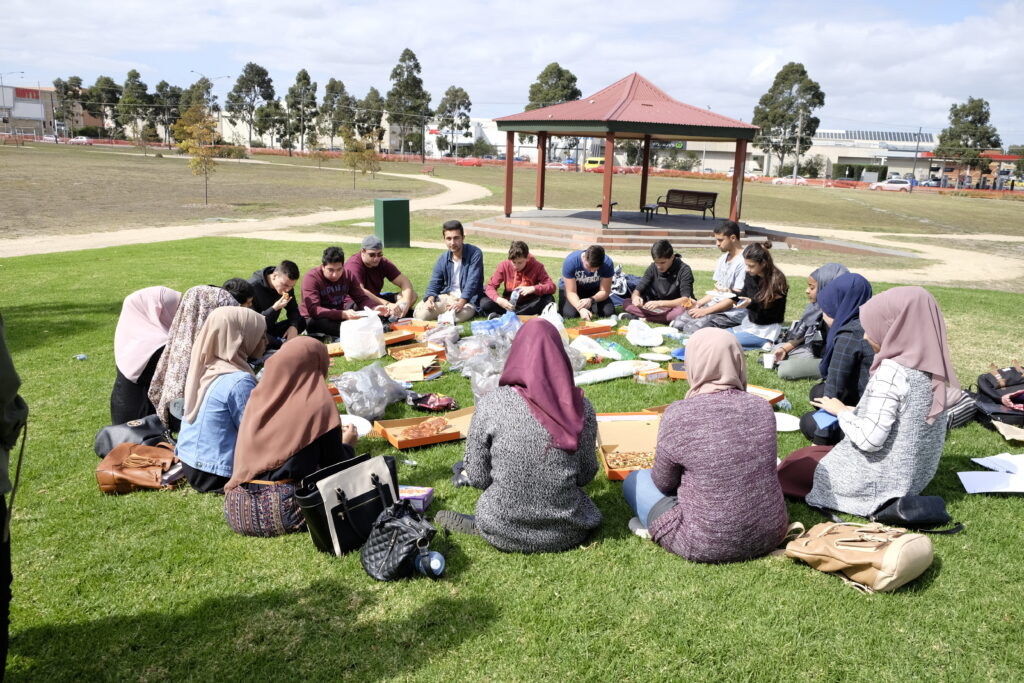
I always will – like many of you, I won’t stop until every single person has a safe, good life or I die.
I believed that if I can get into medicine, I can start my journey to building a better world. I studied incredibly hard, and achieved an ATAR of 99.80. This was the highest ATAR in my community, and the highest ATAR achieved in Broadmeadows and my school’s history until then. I started studying Medicine at Monash. I really enjoyed the one on one patient connections: tt’s such an honour to be able to care for people.
My social change journey began with a 6‑year‑old boy named Hussein, a young boy who needed heart surgery. His cardiologist, Dr Ali Alfiadh, was raising money for his surgery, and I wanted to help. My best friend, Amani, and I started tutoring classes in Broadmeadows, charging $10 per class, and donating the money towards Hussein’s surgery. We supported the efforts which raised $147,000 for Hussain and he thrived.
That experience changed everything.
I realised that I absolutely loved working with my community. After Hussain’s surgery, in 2016, I founded Happy Brain Education. My love for kids who experienced poverty and refugee kids gave me the courage to step outside my comfort zone and establish a charity. I loved those kids too much to stay subservient and hidden. I was so ashamed of my own identity as a poor refugee, and I had to step right into that shame to establish Happy Brain. I established a little circle of love around those vulnerable kids to protect them from social inequality and our broken systems that failed them. I wanted all those kids to know that they were loved, smart, thoughtful and creative. HBE provided access to smart tutors with lived experience of poverty or seeking refuge and the best mentors we could find. As I write this, Happy Brain is now in its 10th year and has helped over 1000 students annually across multiple Australian states. When I was the CEO, the organisation grew to support over 2,000 students, with 50 staff and 300 volunteers.
Management Consulting
A friend in medical school introduced me to a profession I had never heard of: management consulting. Bain & Company offered the True North Fellowship to young women in university, and I applied for the Fellowship to enable me to volunteer in a refugee camp in Jordan.
After receiving the Fellowship, I also received mentoring from Partners at Bain who changed my life. They increased my confidence, expanded my ambition for what I can achieve in my life and showed me how I can influence positive change in a more up-stream, impactful way. This mentoring helped me decide to work at Bain for a few years. I learnt and grew so much from working with global teams, building skills across global projects spanning artificial intelligence, private health, hospital quality and performance improvement.
Global Public Health Work & Rahma Health
My global public health journey began long before Rahma Health existed. As a young medical student, I volunteered in refugee camps in Jordan with the Syrian American Medical Society and later supported community health systems in Uganda. These early experiences showed me how profoundly inequity shapes health outcomes, and how often the communities facing the greatest trauma have the least access to trusted, culturally safe information. I carried those lessons with me for years.
When I became pregnant with my daughter in 2021, I realised how stark the gap was between English and Arabic health information. The communities who needed evidence‑based guidance the most — refugees, families in emergency settings, and people navigating broken health systems — were the least likely to find it in their language or in formats they trusted. That realisation became the catalyst for founding Rahma Health: a global, community‑led movement dedicated to creating accessible, evidence‑based, culturally safe health and parenting resources for Arabic‑speaking families around the world.
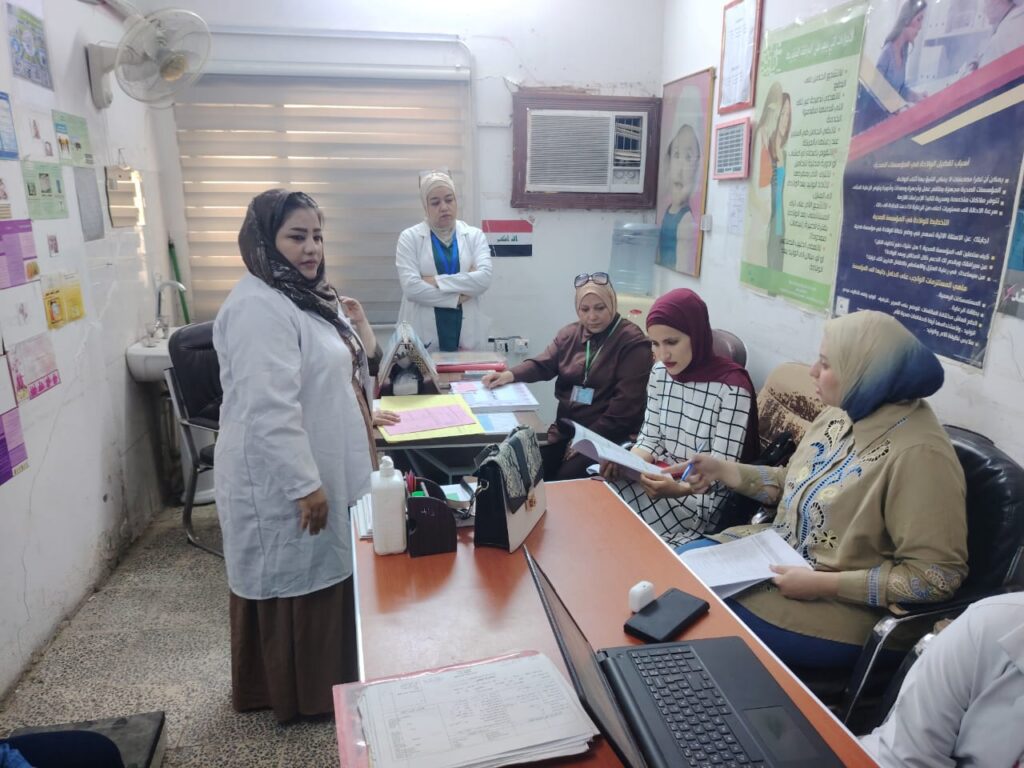
Today, Rahma’s resources have been used more than three million times, reaching families in Australia, Iraq, the UAE, Jordan, Ireland and beyond. Our work teaches something simple and revolutionary: that love — unconditional, attuned, respectful love — is the foundation of health and parenting. Through technology, social media and clinically supervised use of AI, we meet families where they are, in the languages and formats they feel safe with. Every resource is reviewed by clinicians and community members to ensure accuracy, cultural resonance and psychological safety. Families tell us that Rahma has changed the way they parent, the way they care for their health, and the way they understand love itself.
None of this would be possible without the Rahma team — a community of refugees, migrants, mothers, clinicians, public health experts and storytellers who bring both professional expertise and lived experience. Their courage, compassion and brilliance are the heart of Rahma. Together, we are building a global model of health equity: one where a woman in rural Iraq or a refugee camp in Jordan can access the same high‑quality antenatal education as a woman in Melbourne. One where love, dignity and safety are seen as essential to health. One where no community is left behind.
Life Purpose: Love
Love has been the driving force of my life for as long as I can remember.
Even as a child in Iraq, in a world marked by conflict and inequality, I felt love intensely – a deep compassion that made me want to connect with all of humanity.
Love gave me the energy to work hard and get into medicine. I wanted to study hard to help those who were suffering. Love kept pulling me forward, even when the systems around me felt too big, too broken or too indifferent.
It was love that pushed me into social change. When six‑year‑old Hussein needed heart surgery, something in me refused to look away. My love for him — and for every child who had been denied safety, dignity or opportunity — gave me the courage to step into leadership for the first time. Founding Happy Brain Education meant confronting my own shame about being a poor refugee kid from Broadmeadows. It meant being seen. It meant risking failure. But love was stronger than fear. Love made me brave enough to build something that has now supported thousands of young people for over a decade.
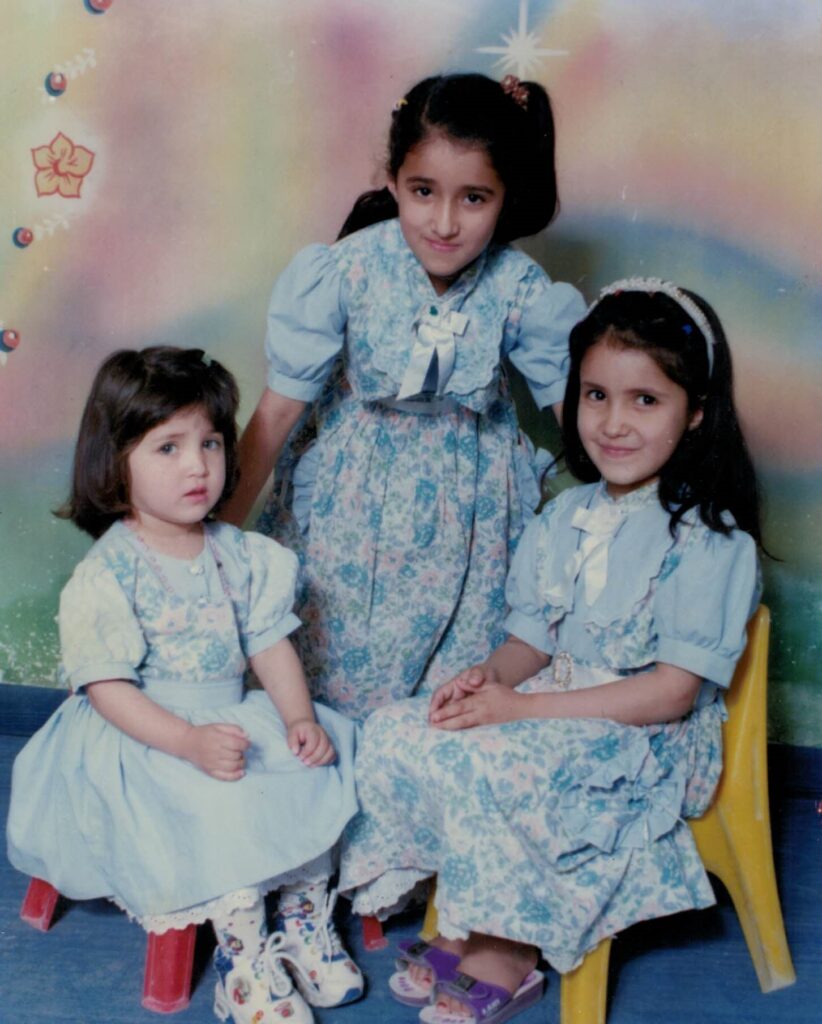
That same love guided me into Rahma Health. When I became a mother, I saw how Arabic‑speaking families, families like mine, were raising children without access to trusted, evidence‑based, culturally safe information. I saw mothers trying their absolute best while carrying the weight of war, displacement, racism and intergenerational trauma. I saw a whole community who deserved gentleness, attunement and unconditional care. And I felt the same pull I felt with Hussein: a fierce, protective love that said, “If this doesn’t exist, then we must build it.” Rahma was born from that love: a love big enough to challenge systems, rewrite narratives and teach families what unconditional love looks like in practice.
Love has always been my compass. It has helped me outgrow fear, shame, identity wounds and the limitations placed on me by the world I was born into. It has guided every major decision of my life — from medicine, to social entrepreneurship, to global public health, to founding an ecosystem of organisations dedicated to healing. My life’s purpose is simple: to learn what love truly is, to embody it as deeply as I can, and to help others experience the kind of love that heals, liberates and transforms. Every step of my journey has been an expression of that purpose, and every step ahead will be too.
Love is the centre of my life’s work.
Awards and Acknowledgement
My work has been recognised nationally and internationally, including:
- Women’s Healthcare Australasia Medal of Distinction
- Victorian Public Healthsector Awards – Victorian Department of Health
- Australian Financial Review & Qantas 100 Most Influential Women in Australia – Young Leader Winner
- Telstra Best of Business Awards 2025 – National 2025 Business of the Year; Accelerating Women National Winner & Championing Health National Winner
- Victorian Multicultural Honour Roll 2024
- Monash University Emerging Alumni Award – Vice Chancellor Sharon Pickering
- Women’s Agenda Leadership Awards – Winner – Health; NFPs
- Kenneth Myer Innovation Fellowship
- Westpac Social Change Fellowship
- Bain & Company True North Award
These acknowledgements reflect not just my work, but the communities, mentors and families who have shaped me.
Stay in Touch
I would love to stay connected